
Neuroscientist Heather Berlin Explains How Letting Go Unlocks Your Brain's Best Performance
· Video lesson
Exercise 1
Vocabulary
Repeat each word, its meaning and the example sentence out loud.
grip
verb (also noun)/ɡrɪp/to hold tightly or cling to something; in this context, to try desperately to maintain control
When the project deadline moved up, the team manager gripped even harder, checking every detail instead of trusting the team.
uncertainty
noun/ʌnˈsɜːrtn̩ti/a situation where you do not know what will happen or what the outcome will be
Market uncertainty meant the startup had to stay flexible with its hiring plans.
flow
noun/floʊ/a state of complete focus and engagement where work feels effortless and time passes quickly
The best developers find flow when they work on complex coding problems without interruptions.
rewire
verb/riːˈwaɪər/to change how something is connected or how it works; to form new patterns of thinking or behavior
After the training, employees needed time to rewire their approach to customer service.
paradox
noun/ˈpærədɑːks/a situation or idea that seems to contradict itself or goes against normal expectations
There is a paradox in management: micromanaging often results in worse performance, not better.
Exercise 2
Video and article
Watch the video, then read the article aloud or listen to it first.
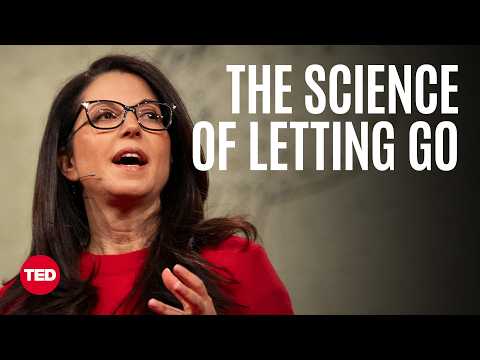
Neuroscientist Heather Berlin Explains How Letting Go Unlocks Your Brain's Best Performance
Tap any word to see what it means.
Neuroscientist Heather Berlin recently shared a surprising discovery about how our brains work when we face uncertainty.
When things feel unpredictable or risky, most people react by gripping tighter—they try to control more, check details obsessively, and stay focused on avoiding bad outcomes. This feels logical, like the best way to stay safe.
However, brain research tells a different story. All that effort to control actually uses up mental energy that your brain could use for creativity, problem-solving, and clear thinking instead.
Berlin describes a paradox: the harder you try to control everything, the more you get in your own way. Your brain becomes stuck in a defensive mode where it cannot think freely or see new possibilities.
This state is the opposite of what researchers call flow. Flow is when you are completely absorbed in what you do, performing at your best without thinking about every move.
Athletes, musicians, and creative professionals know this feeling well.
Getting into flow requires letting go of that tight control. It means trusting your skills and your preparation, then allowing your brain to do what it does best.
This is not about being careless or ignoring risks; it is about choosing which things truly matter and directing your energy there.
Berlin shares practical techniques from neuroscience that help people recognize when they are gripping too hard and shift into a calmer, more productive mindset. These tools work in your brain to interrupt the anxiety cycle and open up space for better thinking.
For people working in tech, this insight is especially valuable. Uncertainty comes constantly—changing markets, new competition, shifting priorities.
Teams that learn to stay calm and step into flow during uncertainty solve problems faster and come up with more creative ideas.
The key is understanding that sometimes the best way to perform better is to try a little less and trust a little more.
Discuss this story out loud with our AI speaking coach.
It asks one question at a time, at your level, and gives you feedback at the end.
Start the discussion Retell it


3,000+ learners
Also works inChatGPTandClaude
Exercise 3
Discussion
Have a discussion based on the following questions.
- 1.Think of a recent project or task where you felt you were gripping too hard. What would have happened if you had tried to let go a little?
- 2.Have you ever experienced flow at work? Describe what that felt like and what conditions made it possible.
- 3.In your team or company, do you see examples of people trying to control everything when facing uncertainty? What is the effect on their work?
- 4.How could understanding this paradox change the way you manage stress during unpredictable periods in a project?
- 5.What specific triggers make you grip tighter—deadlines, unclear requirements, fear of failure? How could you recognize these earlier?
Exercise 4
Further discussion
Have a discussion based on the following questions.
- 1.How can managers and leaders deliberately create conditions in their teams where people can find flow instead of staying in defensive mode?
- 2.What is the relationship between psychological safety and the ability to let go of control at work?
- 3.How does this research apply to different work styles? Are some people naturally better at letting go than others, or can everyone learn this skill?
- 4.In a crisis or high-stakes situation, how do you balance the need to stay focused with the research showing that gripping too hard makes things worse?
Discuss this story out loud with our AI speaking coach.
It asks one question at a time, at your level, and gives you feedback at the end.
Start the discussion Retell it3,000+ learners
Also works inChatGPTandClaude
Source
This lesson is our own retelling, for English learners, of a video from TED.