
Digital Anthropologist Finds AI Helping People Connect, Not Isolate
· Video lesson
Exercise 1
Vocabulary
Repeat each word, its meaning and the example sentence out loud.
erode
verb/ɪˈroʊd/to gradually wear away or weaken something
Some people worry that too much screen time will erode our ability to have face-to-face conversations with colleagues.
synthetic
adjective/sɪnˈθɛtɪk/made by humans or machines, not natural or real
The startup created synthetic data to train their AI model without using real customer information.
poke holes in
phrasal verb/poʊk hoʊlz ɪn/to find weaknesses or problems in an idea or argument
During the product review, the team began to poke holes in the initial design to make it stronger.
digital anthropologist
noun phrase/ˈdɪdʒɪtəl ˌænθrəˈpɑlədʒɪst/a researcher who studies how humans interact with technology and digital tools
The digital anthropologist interviewed users to understand why they preferred voice commands over typing.
turn to
phrasal verb/tɜrn tu/to go to something or someone for help or support
Many employees turn to AI chatbots for quick answers about company policies instead of calling the help desk.
Exercise 2
Video and article
Watch the video, then read the article aloud or listen to it first.
Digital Anthropologist Finds AI Helping People Connect, Not Isolate
Tap any word to see what it means.
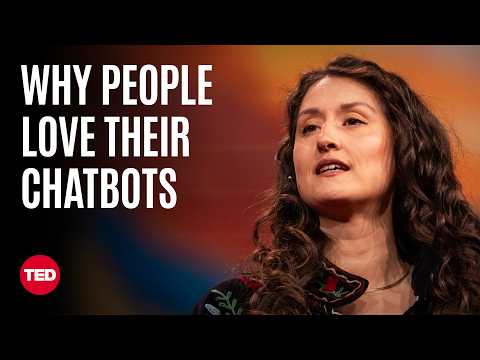
Jennifer Cearns, a digital anthropologist, shared research showing that people are using artificial intelligence in unexpected ways to handle grief, build relationships and find companionship.
Many people believe AI is weakening our humanity by replacing genuine relationships with fake ones that leave us more isolated. Cearns challenges this common worry based on what she learned from hundreds of interviews.
Her research reveals that people are turning to AI tools for emotional support and connection. Some use them to work through grief after losing someone close to them.
Others seek companionship or friendship through AI conversations.
Rather than finding these interactions harmful, Cearns discovered that people often see real value in these relationships. The AI conversations can fill gaps in people's lives where human connection is difficult to find.
One key insight is that these AI relationships are not replacing human ones. Instead, they seem to work alongside existing relationships and sometimes help people feel less alone.
Cearns points out that studying how people actually use technology reveals what they truly need. When people turn to AI for comfort or connection, it shows us something important about modern life and human nature.
The talk challenges the familiar fear that technology separates us from each other. Rather than eroding our humanity, these AI tools might be helping us understand ourselves better.
Cearns argues that we should look at real human behaviour with AI instead of simply assuming technology harms us. Her research suggests the relationship between humans and AI is far more nuanced than the common narrative suggests.
Discuss this story out loud with our AI speaking coach.
It asks one question at a time, at your level, and gives you feedback at the end.
Start the discussion Retell it


3,000+ learners
Also works inChatGPTandClaude
Exercise 3
Discussion
Have a discussion based on the following questions.
- 1.In your own work, have you seen AI tools being used in ways you did not expect when they were first introduced?
- 2.Do you think there are situations where turning to an AI tool for support is better than avoiding connection altogether, or do you disagree with Cearns?
- 3.What emotional needs do you think AI might fill in the future workplace, based on what you know about remote work and digital teams?
- 4.How do you think companies should balance promoting human interaction while also accepting that some people prefer digital tools?
- 5.If you were building an AI product to help people connect or grieve, what would be your responsibility to ensure it supports them without replacing human relationships?
Exercise 4
Further discussion
Have a discussion based on the following questions.
- 1.How might the rise of AI companions change the way we think about loneliness and mental health in society?
- 2.What ethical guidelines should technology companies establish to ensure AI relationship tools are designed responsibly?
- 3.Could AI tools eventually become so sophisticated that the line between 'real' and 'synthetic' relationships becomes meaningless, and if so, does that matter?
- 4.How might different cultures view AI relationships differently, and what does that tell us about how technology and human values interact?
Discuss this story out loud with our AI speaking coach.
It asks one question at a time, at your level, and gives you feedback at the end.
Start the discussion Retell it3,000+ learners
Also works inChatGPTandClaude
Source
This lesson is our own retelling, for English learners, of a video from TED.
Related stories

A Mathematician and an AI System Both Claim to Have Solved the Riemann Hypothesis
22 November 2026 · C2

Anthropic's IPO: Can a safety-focused AI company survive shareholder pressure?
22 November 2026 · C1

Self-Teaching AI Systems: A Breakthrough or a Risk?
22 November 2026 · B2

AI and sensors help warn communities about dangerous landslides
22 November 2026 · B1